


Mediterranean Garden Decor Ideas for Hot, Dry Climates
By early July, a Mediterranean garden tells you what it thinks of decoration. Thin plastic pots go chalky and fade to a tired pastel. Dark metal handles blister your palm. A pretty glass ornament left on a wall becomes a puzzle of sharp pieces. Resin statues that looked like stone in the shop turn shiny and hollow. Black cushions become too hot to touch, and a mirrored mobile throws a hard white glare into the kitchen window. The garden is not being difficult; it is being honest. In hot, dry climates, decor has to earn its place. It should handle glare, wind, dust, and weeks without rain—and still look good enough to draw you outside at eight in the evening. The best pieces do more than sit there. They cast shade, hold scent, mark a path, give a potted olive a place of honor, or make a wall feel less bare. They also age well. A scratch on terracotta is just a scratch. A crack in cheap plastic is the beginning of the end.
This is not only a Mediterranean coast problem. The same rules apply in inland California, central Texas, South Australia, parts of South Africa, and much of the Middle East. The sun is strong, the air is dry, and the wind arrives when it feels like it. Good decor here is not fussy. It is tough, tactile, and useful. It should look better with a little dust, not worse.
Choose materials that like the heat
Start with fired clay, stone, concrete, and powder-coated metal. Thick-walled terracotta is classic for a reason: it breathes, ages well, and its warm color belongs here. Look for unglazed pots with wide bases; they stay cooler and are less likely to tip in wind. A pot with a narrow foot and a tall body may look elegant, but in a gust it becomes a lever. If you want glazed ceramic, choose a high-fired pot with a thick wall and a drainage hole, and place it where it will not be knocked. Glaze can look wonderful against dry gravel, but a glossy dark glaze in full afternoon sun will heat up fast and can stress roots.
Local stone—limestone, tufa, travertine—makes sense for plinths, stepping stones, and low walls. Stone is heavy, so use it where you want permanence: at the foot of a gate, beside a bench, under a large pot. Concrete, cast in simple shapes, is heavy enough to stay put and softens with age. A plain concrete bowl, a square plinth, or a low bench can do more than a row of small ornaments. For furniture and frames, powder-coated aluminum is light and won't rust; teak or acacia, left to weather, is better than thin painted wood that peels. Corten steel can work for a planter or a screen, but it stains paving when it rains, so put a tray underneath or keep it over gravel. Woven rattan and bamboo can be lovely in a covered courtyard, but check them for fading and rot if they sit in full sun or get occasional irrigation spray.
A quick material check
- Favor: thick terracotta, high-fired glazed ceramic, local stone, cast concrete, powder-coated aluminum, corten steel, weathered teak or acacia, galvanized metal with a matte finish, and natural fiber only under cover.
- Avoid: thin plastic, resin made to look like stone, untreated mild steel, dark glossy metal in full sun, mirrored or glass ornaments, delicate rattan left exposed, thin painted wood, vinyl cushions that go tacky, and anything with a small base and a tall sail-like surface.
Test a piece before it bakes
You can learn a lot in the shop or salvage yard. Lift the piece. If it is light enough to move with one hand and tall enough to catch wind, it needs anchoring. Tap it. A dull, solid sound usually means thick walls; a thin ring can mean a fragile shell. Check the base. Wide is stable; narrow is a gamble. Look for drainage holes in pots, and plan to raise them on feet so water does not sit. Run your hand over the surface. Rough stone, matte glaze, and powder coating hide dust better than mirror polish. Finally, think about color. A black urn in full sun becomes a hot plate. A pale stone or chalky terracotta stays cooler and reflects light instead of throwing it back at you.
Design for glare, shade, and the evening hours
In a hot garden, decoration is often about what blocks the sun and what happens after it drops. A beautiful object in the wrong place can make a space feel hotter. A mirrored surface on a west wall, a white plastic table that bounces glare, or a dark metal bench in the open all work against you. The fix is not to remove everything. It is to place decor where it creates comfort: under a pergola, beside a wall that holds shade, at the end of a path that you actually want to walk at dusk.
Make shade part of the decoration
A simple pergola with a slatted roof is both architecture and ornament. It throws stripes of shadow across a wall, and it gives a bench or a table a reason to exist. A deciduous vine—grape, wisteria where water allows, or a native climber—adds seasonal shade without permanent gloom. If you do not have a pergola, use a large potted olive, a fan palm, or a sculptural agave to cast a strong shadow. Even a low stone wall can be decor if it gives you a place to sit in the evening and holds the last warmth of the day. Group furniture in shade rather than scattering it. One good bench under a tree is better than three chairs baking in the open.
Choose colors that flatter heat
Think of the colors of the place: chalk white, sand, bone, olive, rust, charcoal, and the blue of a distant sea. These colors do not fight the light. They also hide dust. A pure white cushion may look crisp for a week; a sand-colored canvas will look good for years. Use strong color in small doses—a painted door, a glazed pot, a strip of tile—rather than across a whole wall. And be careful with dark metal. Charcoal furniture can look elegant, but in direct sun it can be painful to touch. Put it under shade or choose a lighter finish.
Light for dusk, not for noon
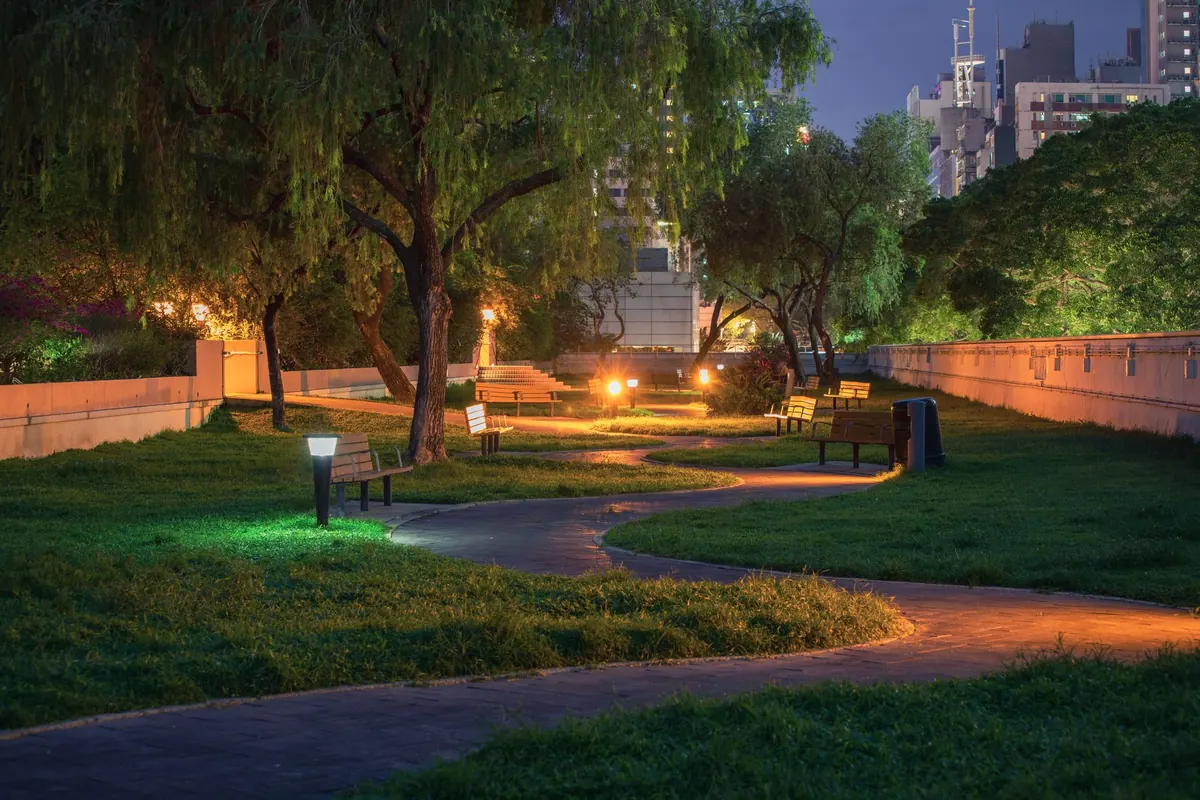
Good lighting extends the garden into the evening. Use low, warm lights that point down or across a path, not up into your eyes. A few unbreakable lanterns—powder-coated metal, ceramic, or wood—can sit on a table or hang from a beam. Solar lights are convenient, but cheap ones often fail within a season; choose a few good ones rather than a dozen weak ones. Avoid glass globes where children or wind might knock them. If you want candles, use them in deep holders and keep them away from dry leaves and fabric. The goal is not a runway. It is a soft invitation to stay outside a little longer.
Anchor the scene with plants, stone, and a little water
Decor in a dry garden should not compete with the plants. It should give them a frame. A large pot gives a rosemary bush a place of honor. A stone plinth lifts an agave into view. A gravel court makes a single olive tree look intentional. The most useful pieces are often the simplest: a bench, a bowl, a path, a wall. They do not ask for water, and they do not mind dust.
Use plants as living ornament
Mediterranean plants are already decorative. Olive, rosemary, lavender, cistus, thyme, sage, and ornamental grasses bring scent, movement, and silver-green color. Agave, aloe, and euphorbia add structure. Use them in repeated pots along a path, or in one large container where you sit. Group pots in odd numbers and vary heights so the eye has something to do. But do not overcrowd. In hot, dry climates, air movement matters, and a jammed collection of pots can become a hiding place for pests and a trap for heat. Choose fewer, better pots and let them breathe.
Add water in small, honest doses
A small water feature can be a wonderful ornament, but it must be managed. A shallow birdbath or a recirculating fountain gives birds a place to drink and adds sound without asking for a lawn. Keep it in shade if possible, refresh it often, and keep the pump running so mosquitoes do not breed. A wide, shallow bowl is safer than a deep one, and a simple spout is easier to maintain than a complex cascade. If water is scarce, do not feel you must have it. A dry stone bowl, a gravel garden, or a sculptural piece of driftwood can give the same sense of calm without the maintenance.
Edit and maintain without fuss
Finally, edit. In a hot climate, clutter shows. Dust settles on small objects, wind knocks them over, and the sun bleaches anything that is not colorfast. Keep a few strong pieces and move them when they stop working. Sweep paving before you add another ornament. Wash cushions before they crack. Check ties and anchors before the windy season. A garden that is easy to care for is more likely to be used, and a garden that is used is decorated best by people sitting in it.
In a hot, dry garden, the best ornament is often a shadow, a cool seat, and a pot that looks better after ten years than it did on the day you bought it.
That is the standard to aim for. Choose materials that like the heat, place them where they make shade or mark a path, and let plants and stone do most of the work. The result will not look like a catalogue. It will look like a garden that belongs there—and that is the point.
Photo: Hans / Pixabay